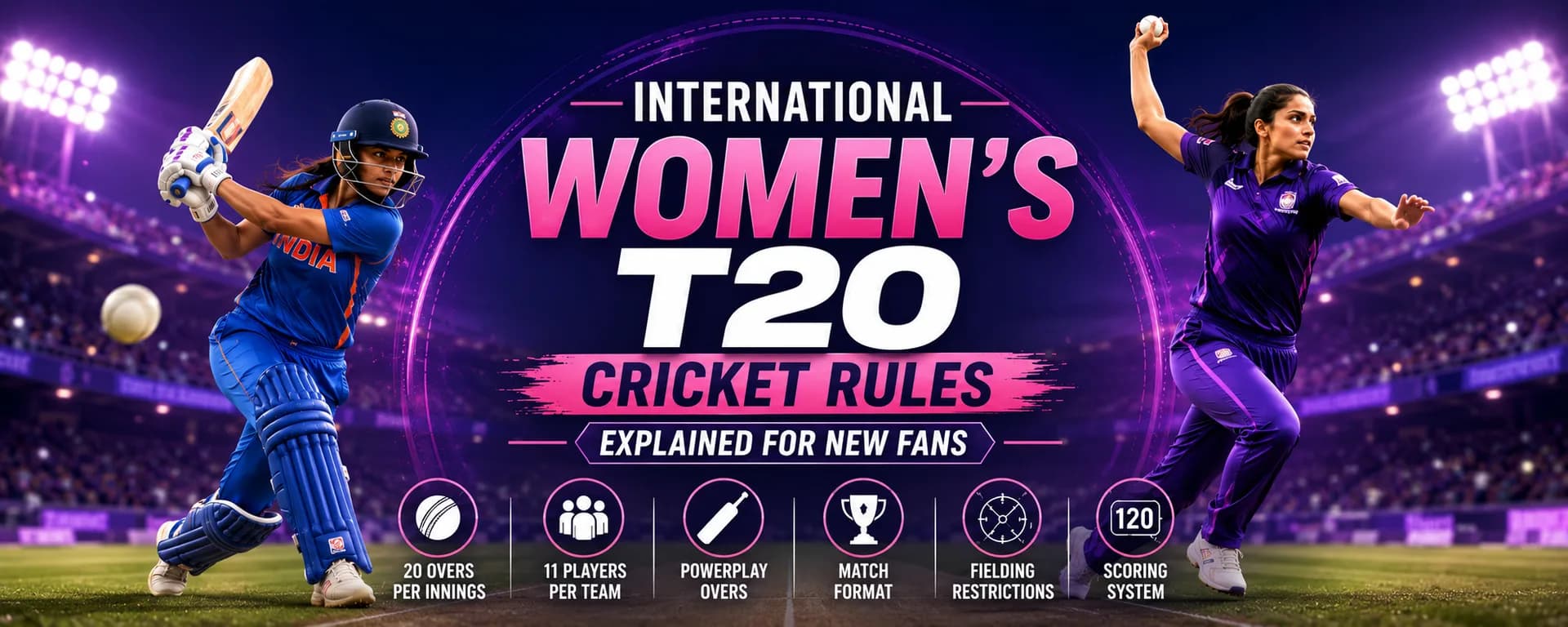
International Women’s T20 Cricket Rules Explained for New Fans
Women’s T20 cricket has grown into one of the most exciting formats in sport. Fast-paced, unpredictable, and packed with big moments, it has attracted millions of new fans across the world. Yet for first-time viewers, cricket can feel slightly overwhelming. Terms like powerplay, LBW, and free hit may sound confusing at first.
The good news is that once you understand the basics, women’s T20 cricket becomes incredibly easy to follow. This beginner-friendly women cricket guide breaks down the essentials and explains the key rules every new fan should know.
What Is Women’s T20 Cricket?
International women’s T20 cricket is the shortest official format of the game. Each team gets one innings of 20 overs, with every over consisting of six balls. The side scoring the most runs at the end wins the match. Compared with Test cricket or One Day Internationals, T20 cricket is designed to be faster and more entertaining, often lasting around three hours.
Understanding the Toss and Innings
Every match begins with a coin toss. The winning captain chooses whether to bat or bowl first depending on pitch conditions, weather, and team strengths.
One team bats while the other bowls and fields. After 20 overs, or if ten wickets fall before the overs are completed, the teams switch roles. The chasing team then attempts to score more runs than the opposition.
These are the most important T20 cricket basics every fan should know.
What Is the Powerplay?
The powerplay is one of the most exciting parts of a T20 match. During the first six overs, fielding restrictions apply, meaning only a limited number of fielders are allowed outside the inner circle. This rule encourages aggressive batting and often leads to quick scoring in the opening phase of the innings.
Key Dismissal Rules Explained
Understanding wickets is central to following cricket. A batter can be dismissed in several ways:
- Bowled: The ball hits the stumps.
- Caught: A fielder catches the ball before it touches the ground.
- Run Out: A player fails to reach the crease before the stumps are broken.
- LBW (Leg Before Wicket): The batter blocks the ball illegally with the leg when it may have hit the stumps.
These are among the most common cricket rules explained to beginners.
Extras and Free Hits
Sometimes runs are awarded without the batter scoring them. These are called extras and include wides and no-balls.
If a bowler delivers a no-ball, the batting team earns a free hit on the next delivery, meaning the batter cannot usually be dismissed except through a run-out. This rule adds excitement and creates momentum shifts during close matches.
Why Understanding the Rules Makes Cricket More Fun
The beauty of women’s T20 cricket lies in its balance between strategy and excitement. Once fans understand the basic rules, every over feels meaningful and every tactical move makes sense. Learning the game adds a new layer of enjoyment to every boundary, wicket, and dramatic finish.
For sports lovers who want the latest match updates, live scores, breaking stories, and expert sporting insights, SportlyRadar.com has become a favourite destination. Whether it is cricket, football, tennis, or major global events, SportlyRadar keeps fans connected to the action that matters most.